
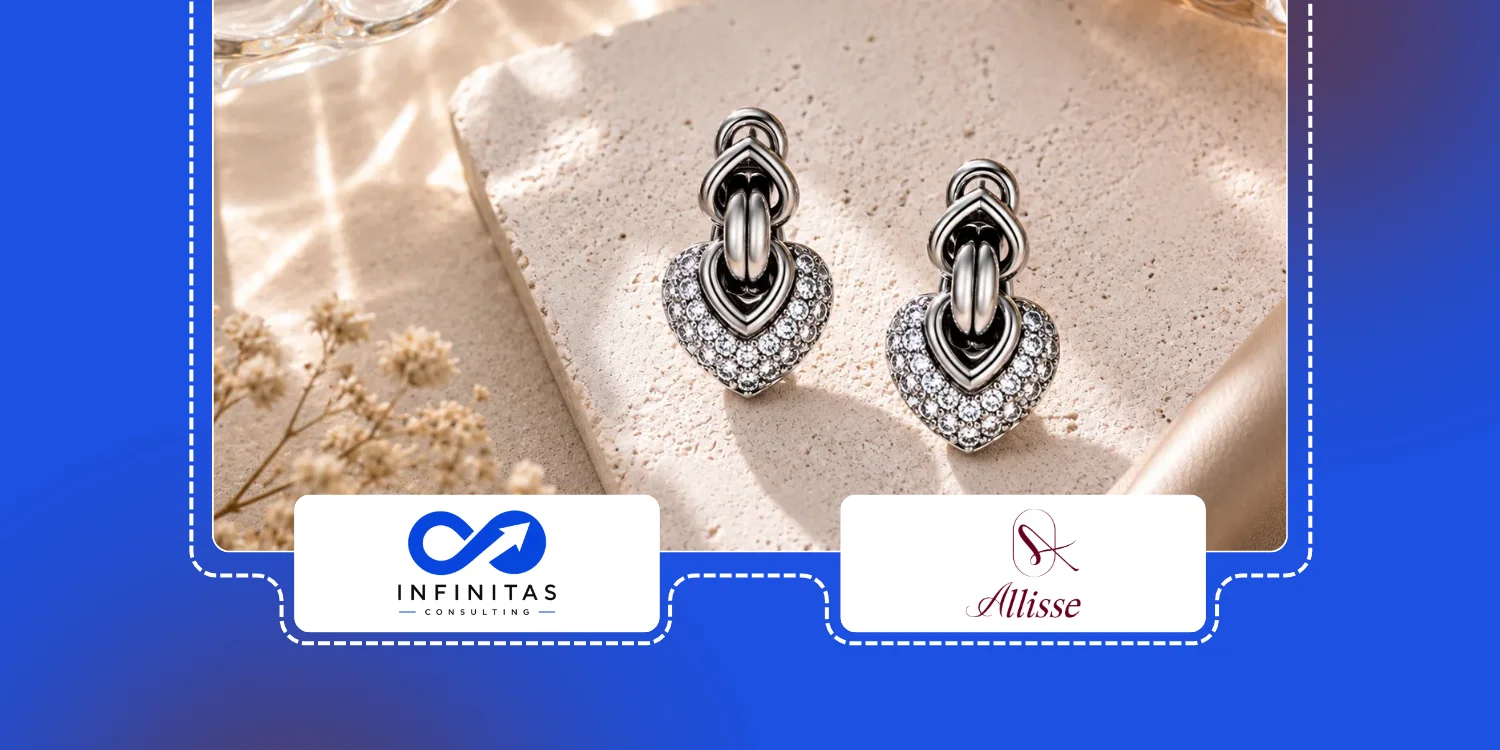
 E-Commerce Development
Allisse Fine Jewellery
Fine jewellery brand. Custom WordPress and WooCommerce store pairing luxury presentation with a straightforward shopping journey.
View projectOnline stores on Shopify and WooCommerce — quick to load, simple to buy from, and straightforward to run once they're yours.
Plenty of online stores pass a design review and fail in the numbers. The product page doesn’t answer the objection. Postage appears at the last step. Search doesn’t find something that’s clearly in stock.
None of that shows up in a mockup. It shows up in the drop-off rate, months later, once the traffic is being paid for.
The second problem is ownership. Some stores are built in a way that keeps the customer list, the theme or the platform account out of the owner’s hands.
A $3,000 piece and a $30 one need different pages. So do wholesale buyers and retail customers.
Every product has an objection — fit, quality, postage, returns. The page's job is to handle it before it's asked.
Stock, postage, packing and returns shape the build more than the design does.
Search, ads, social or an existing list. Each arrives with a different question, and product pages should answer it.
For most stores. Reliable, fast to launch, and the hosting, security and payments are handled for you. The trade-off is a monthly fee and less control over how things work under the bonnet.
For stores already on WordPress, or those needing unusual rules around pricing, membership or wholesale. More control, more flexibility, and more of the maintenance sits with you.
Moving from one platform to another, or off a marketplace onto your own store. Products, customers and order history come across, and we plan it so the search rankings survive the move.
Timeframes are agreed at scoping. Product data is usually what decides them — photos, descriptions, variants and stock.
About an hour with Nitalia. Catalogue size, how orders are fulfilled, who’s buying and what stops them.
Shopify or WooCommerce, with the reasoning explained rather than asserted.
Categories, product templates and checkout flow agreed before design starts.
Store, products, payments, shipping and tracking.
We put real orders through before you do. Payment, confirmation emails, shipping rules, refunds.
Everything transferred into your name, with training on running it day to day.
E-Commerce Development
Fine jewellery brand. Custom WordPress and WooCommerce store pairing luxury presentation with a straightforward shopping journey.
View projectIn your name, with your access, from day one.
The customer list is the part worth guarding. It’s the one asset no platform or agency should sit between you and — and on some setups, that’s exactly what happens.
Shopify if you want it reliable and simple and don’t mind the monthly fee. WooCommerce if you’re already on WordPress or need unusual rules around pricing, wholesale or membership. We’ll recommend one after seeing your catalogue.
It depends on catalogue size, how many product variants you have, and whether anything needs custom work. You’ll get a firm figure after scoping.
Yes. Products, customers and order history come across, and we plan the move so your search rankings survive it.
Yes, and we’d rather you could. Training on products, promotions and orders is part of handover.
We can — Google Shopping, Meta Ads and email all sit alongside this work. You’re not obliged to take it.
You do, from day one. It’s yours, it’s exportable, and nothing about our setup gets in the way of that.
Twenty minutes, no pitch. Send us the URL or describe what you’re selling, and we’ll tell you where we think the drop-off is — including if the answer is that the store is fine and the traffic isn’t.
Prefer email? [email] — we reply within one business day.